


Is It Worth Studying Computer Science in the AI Era?
The Professions and Skills That Will Be in Demand by 2030
Artificial intelligence is rapidly transforming the world of work. AI tools can already write code, analyze data, create content, and perform tasks that once required hours of professional work. This shift raises a natural question for those considering academic studies: Is it still worth studying computer science in the AI era?
The answer emerging from labor market forecasts is yes — but computer science in the coming years will look different from what we have known in the past.
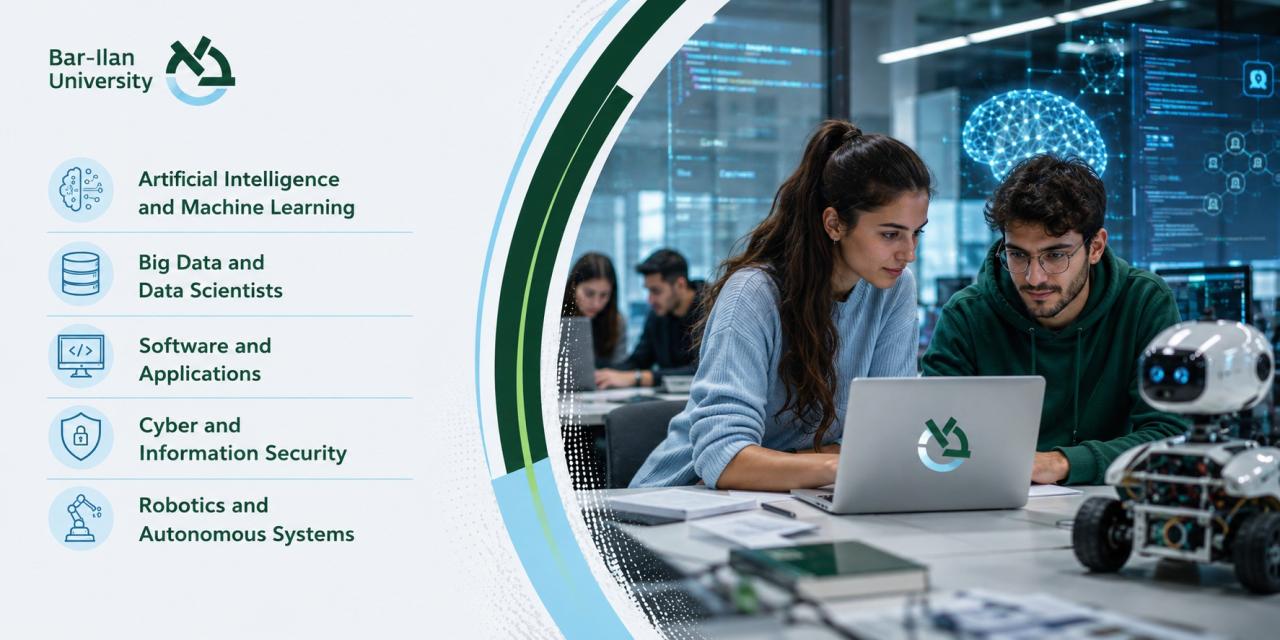
According to the World Economic Forum’s (WEF) Future of Jobs Report 2025, several of the fastest-growing professions through 2030 are at the heart of the computing world: Big Data Specialists, Artificial Intelligence and Machine Learning Specialists, and Software and Applications Developers. The fields of networks, information security, and cybersecurity are also expected to continue growing in importance.
Therefore, the question is no longer simply “Should I study computer science?” but rather: Which fields and skills should I study in order to succeed in the technology landscape of 2030?
Which Technology Professions Will Be in Demand by 2030?
The Future of Jobs Report 2025 identifies several key technology professions that are expected to grow in the coming years.
Artificial Intelligence and Machine Learning Specialists
AI and Machine Learning specialists develop systems and algorithms capable of learning from data, identifying patterns, predicting outcomes, and performing complex tasks.
As organizations integrate more artificial intelligence systems into their workflows, the need is growing for professionals who understand not only how to use AI, but also how to develop, improve, and implement such systems.
Big Data Specialists and Data Scientists
Organizations collect enormous amounts of information, but data alone is not enough. Professionals are needed who know how to analyze it, identify patterns, and derive meaningful insights from it.
This is why Big Data Specialists and Data Scientists are among the professions expected to grow rapidly toward 2030.
Software and Applications Developers
Despite the rapid development of AI tools capable of writing code, Software and Applications Developers continue to appear among the growing professions.
The reason is simple: as the world becomes increasingly digital, more software systems, applications, digital services, and AI-based systems are needed.
The role of the developer is changing — but the need for people who understand algorithms, computer systems, software design, and complex problem-solving remains significant.
Cybersecurity and Information Security Specialists
As more information, services, and processes move into digital environments, the need to protect them also grows.
Information security, networking, and cybersecurity professionals are needed to respond to attacks, protect systems and data, and develop new security solutions.
The importance of this field is expected to grow even further in a world where AI systems are becoming part of organizations’ core infrastructure.
Robotics and Autonomous Systems Specialists
Robots and autonomous systems are gradually entering industry, transportation, and services. Developing these systems requires a combination of algorithms, artificial intelligence, computer vision, planning, and decision-making.
Robotics and automation are therefore also among the technology fields relevant to the future world of work.
Will AI Replace Programmers?
AI is already changing the way programmers work. Artificial intelligence-based tools can write code snippets, identify errors, and suggest solutions.
But this does not mean there is no longer a need to study programming or computer science.
On the contrary: as these tools become more powerful, the ability to understand what the system is doing, how it works, whether the result is correct, and how to design a complex system beyond a single piece of code becomes even more important.
The Future of Jobs Report also presents a complex picture: technology may reduce the need for some routine programming tasks while simultaneously creating demand for software developers and technology professionals in new fields.
The computing professionals of the future will therefore need to know how to work with AI, rather than compete with it on tasks it can perform automatically.
Which Skills Will Technology Professionals Need in 2030?
Programming knowledge alone will not be enough.
According to the WEF, alongside technological skills, human and cognitive abilities are also expected to remain highly important.
Artificial Intelligence and Big Data
AI and Big Data are among the skill areas expected to experience the fastest growth in demand. Technology professionals will need to understand how AI systems work and how to work with large-scale data.
Networks and Cybersecurity
The ability to understand systems and networks and protect them is becoming increasingly important as the world becomes more digital and interconnected.
Analytical Thinking
One of the key skills in the future world of work is the ability to take a complex problem, break it down, analyze information, and arrive at a well-founded solution.
It is also one of the foundations of computer science education.
Creative Thinking
As AI becomes capable of performing more routine tasks, the importance of the human ability to think differently, define new problems, and develop original solutions increases.
Curiosity and Lifelong Learning
Technologies change rapidly. Programming languages, development tools, and platforms that are central today may change within just a few years.
One of the most important skills for computer professionals is therefore the ability to continue learning throughout their careers.
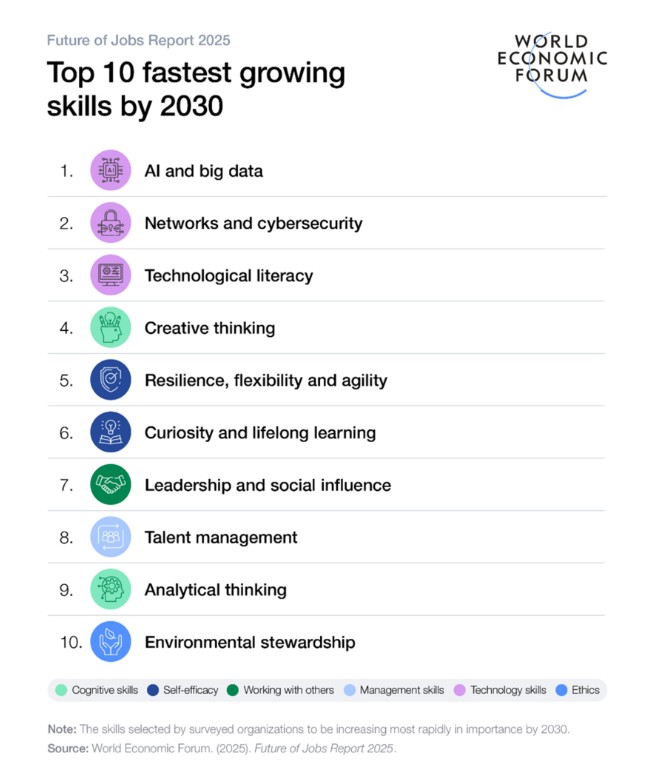
Photo: World Economic Forum, The Future of Jobs Report 2025
What Do You Study in Computer Science and Artificial Intelligence at Bar-Ilan University?
The Computer Science degree at Bar-Ilan University provides a strong foundation in computer science alongside opportunities to deepen knowledge in fields at the forefront of research and technology.
Research and teaching areas in the department include, among others, artificial intelligence, machine learning, data science, cybersecurity and cryptography, natural language processing, computer vision, and robotics.
The combination of computer science fundamentals with advanced fields enables students not only to learn how to use existing technologies, but also to understand the principles behind them.
Is a Computer Science Degree Suitable for Someone Who Wants to Work in AI?
Yes. Computer science provides much of the core foundation required for professional work in artificial intelligence: algorithms, programming, data structures, mathematics, computer systems, and computational thinking.
Students can later specialize in areas such as Machine Learning, Data Science, natural language processing, computer vision, and robotics.
For those who aspire to develop AI systems rather than simply use existing AI tools, a strong foundation in computer science can be particularly valuable.
Can You Pursue a Career in Cybersecurity After a Computer Science Degree?
Computer science is also a relevant foundation for careers in cybersecurity and information security.
An understanding of algorithms, computer systems, networks, software, and cryptography can support entry into a wide range of roles related to protecting systems and information.
Cybersecurity and cryptography are also among the research areas in the Department of Computer Science and Artificial Intelligence at Bar-Ilan University.
What Can You Do With a Computer Science Degree?
Computer science graduates can pursue a wide range of careers in the technology sector, depending on their specialization, experience, and further studies.
Possible career directions include:
Software and application development
Artificial intelligence and machine learning
Data Science and Big Data
Cybersecurity and information security
Algorithms
Natural language processing
Computer vision
Robotics and autonomous systems
Research and development
Many of these fields are located precisely at the intersection between today’s emerging technologies and the professions expected to continue growing toward 2030.
So, Is It Worth Studying Computer Science in the AI Era?
AI does not make computer science less relevant. It changes the type of knowledge and capabilities computing professionals need.
In a world where systems can write code and perform automated tasks, the advantage will belong to those who understand deeply how systems work, know how to solve complex problems, work with data, develop algorithms, and use artificial intelligence as part of their professional toolkit.
Computer Science and Artificial Intelligence studies at Bar-Ilan University combine the foundations of computer science with fields such as AI, Machine Learning, Data Science, cybersecurity, NLP, and robotics — areas at the center of the technological transformation taking place today.
Primary Source: World Economic Forum, The Future of Jobs Report 2025.